Enterprise UX · Digital transformation
Hajj Enterprise Operations Platform
From meeting-driven reporting to digital operational intelligence
- Enterprise B2B
- Meeting-driven → digital
- UX Lead, hands-on
- Multi-team, Power BI, legacy data
- Live for 2026 Hajj season
Overview
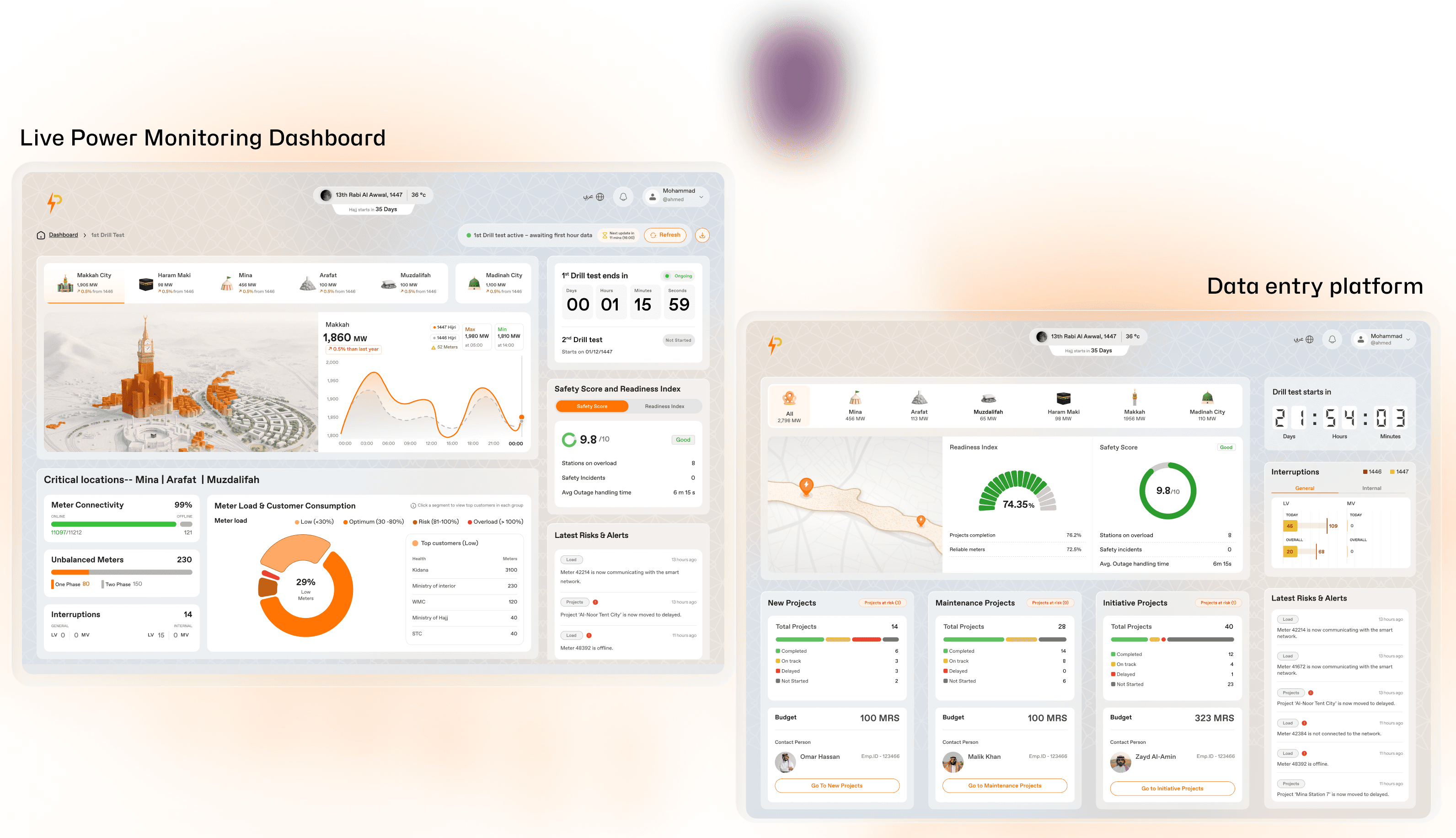
Led the UX transformation of a PowerPoint- and meeting-driven Hajj reporting process into a connected enterprise platform for operational data capture, validation, reporting and executive decision-making.
Client
Leading energy provider in Saudi
Role
UX Lead + Product Designer
Duration
4 months
Team
2 designers, with PM, Ops, Mecca and development counterparts
Delivery
2026 Hajj season — MVP 3
The problem
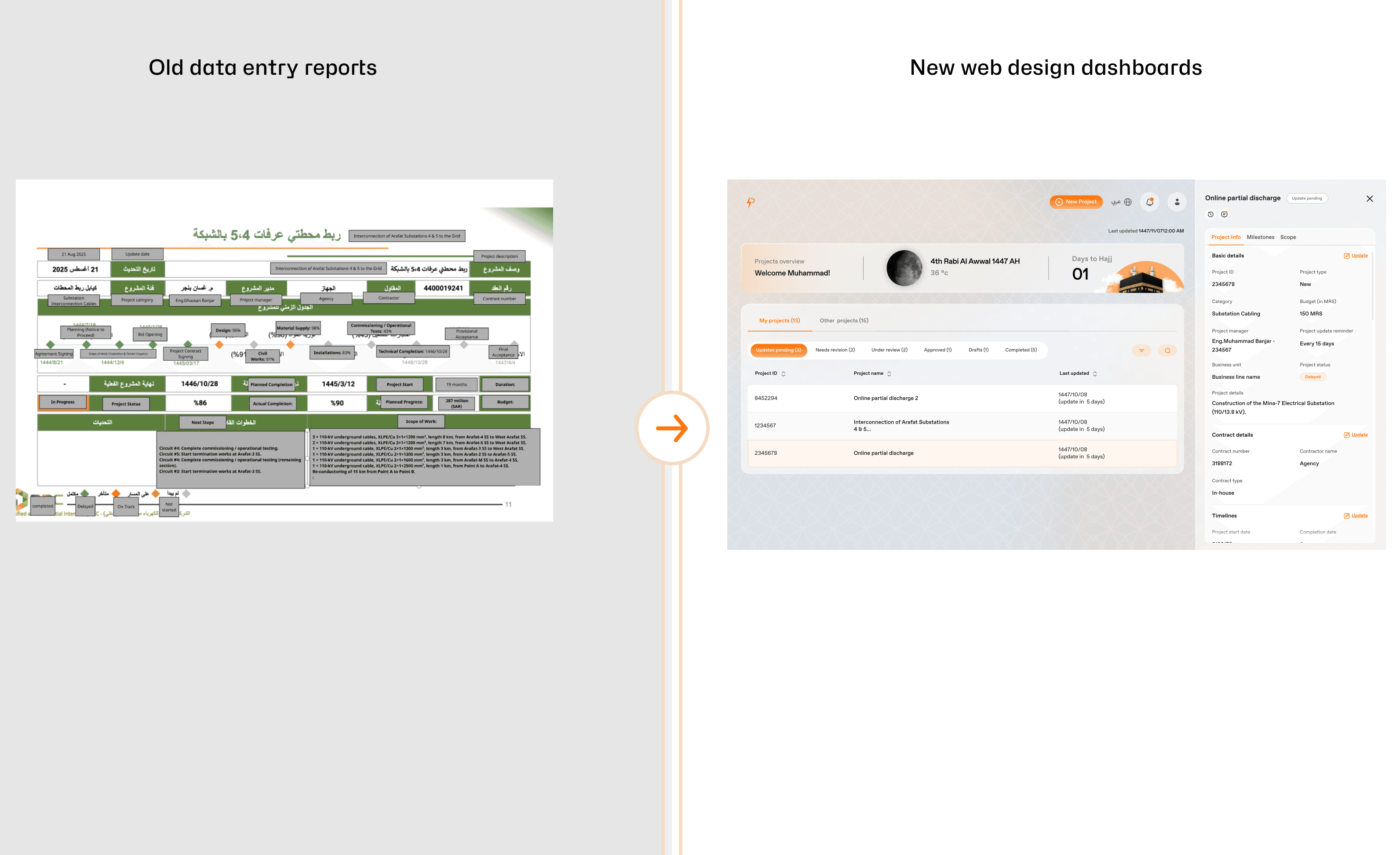
Operational reality lived in decks and meetings
- Operational status was reported in PowerPoint decks, assembled by hand.
- Each department reported in its own structure and its own terminology.
- Progress was reviewed in physical meetings, on the meeting's schedule.
- Information arrived fragmented and inconsistent across sources.
- There was no digital view of consumption, outages, overloads or readiness.
What the organisation needed was a single path: capture reality on the ground, validate it, publish it digitally, and put timely information in front of leadership while there was still time to act.
Approach & key decision
Getting the governance model right before designing on top of it
- Role
- UX Lead, hands-on throughout: discovery, data and KPI analysis, information architecture, flows, hi-fi UI, developer handoff and QA. I led two designers on the engagement.
- Challenge
- Information was fragmented, inconsistently structured, and rarely tied to a clear action. Source reports were in Arabic and translated for the design work, with terminology verified against native speakers before it entered the interface.
- Governance decision
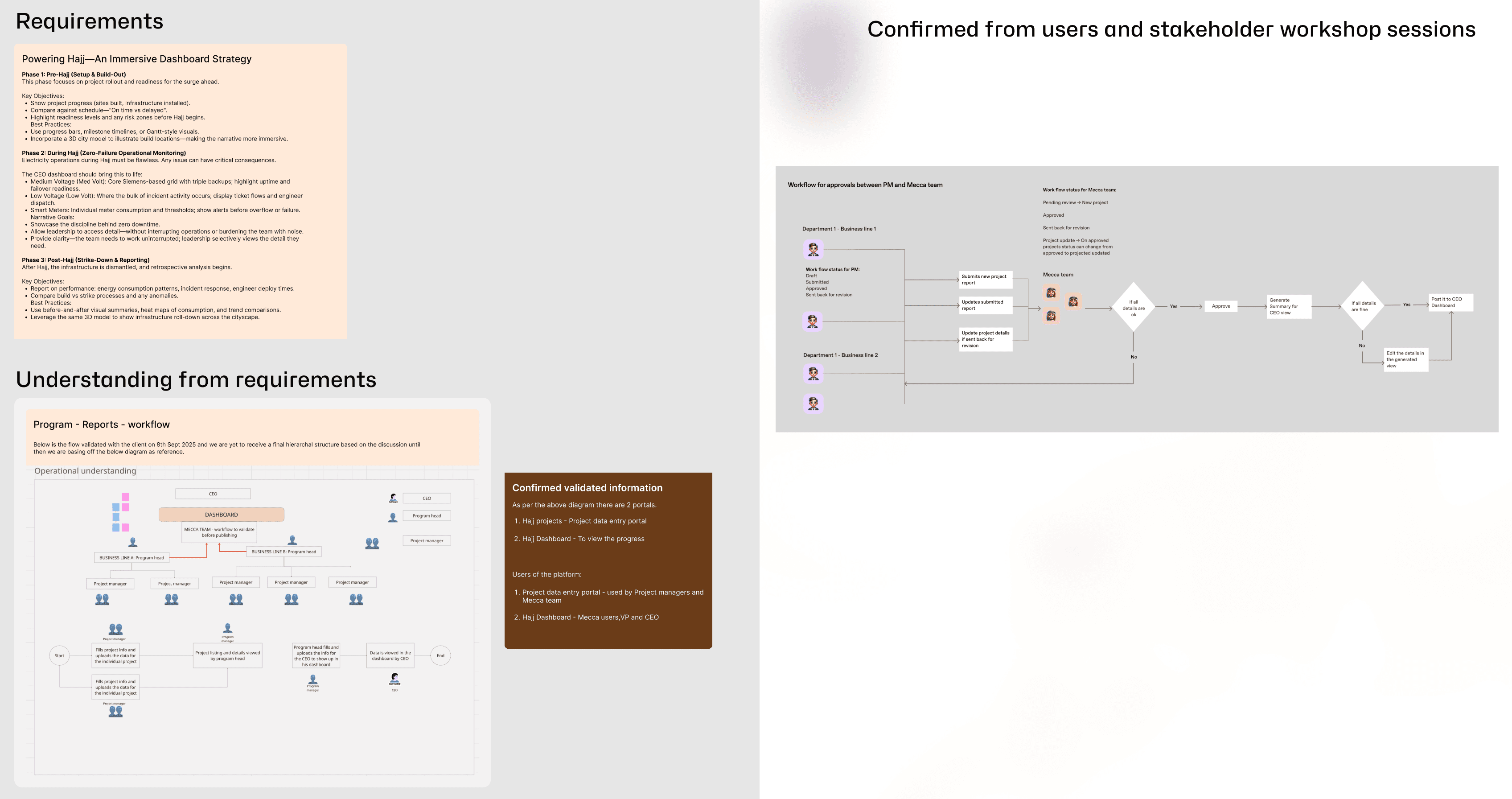
- The initial assumption was that Mecca users would correct project data directly. The validated model inverted it: the project manager reports reality, the Mecca team reviews, and then either approves and publishes or sends it back for revision. Catching this before the downstream design was built kept the approval trail, the states and the entire data-entry surface aligned with how the organisation actually works — the single clearest UX-leadership moment on the project.
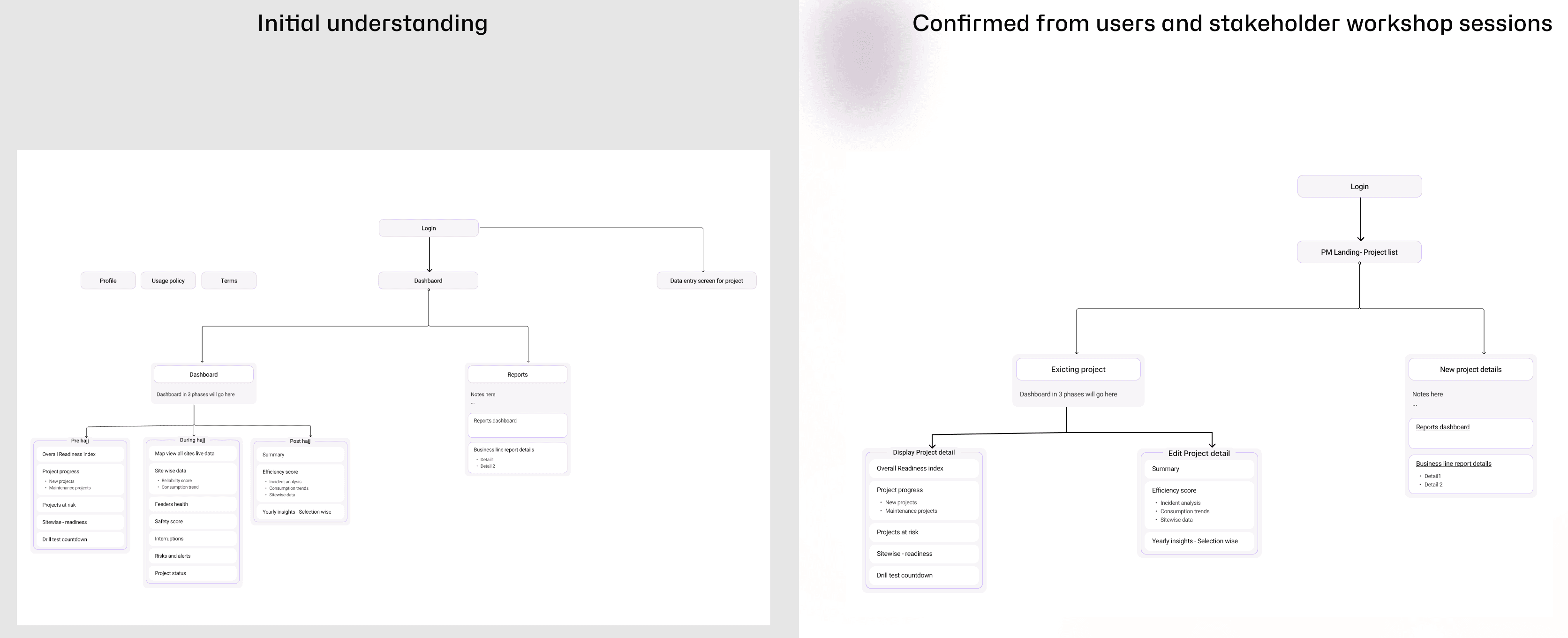
The workflow
Capture → validate → publish → decide
01 · Project manager
Capture
Reports ground reality against their own projects, in a structured entry flow rather than a deck.
02 · Mecca team
Validate
Reviews each submission and either approves it or sends it back for revision, with the trail preserved.
03 · The platform
Publish
Approved information moves into structured digital reporting instead of a scheduled review meeting.
04 · CEO & operations
Decide
Read readiness, load, interruptions and risk from a shared view, and act on them in the same cycle.
Execution & constraints
Two surfaces, one vocabulary, inside a fixed data model
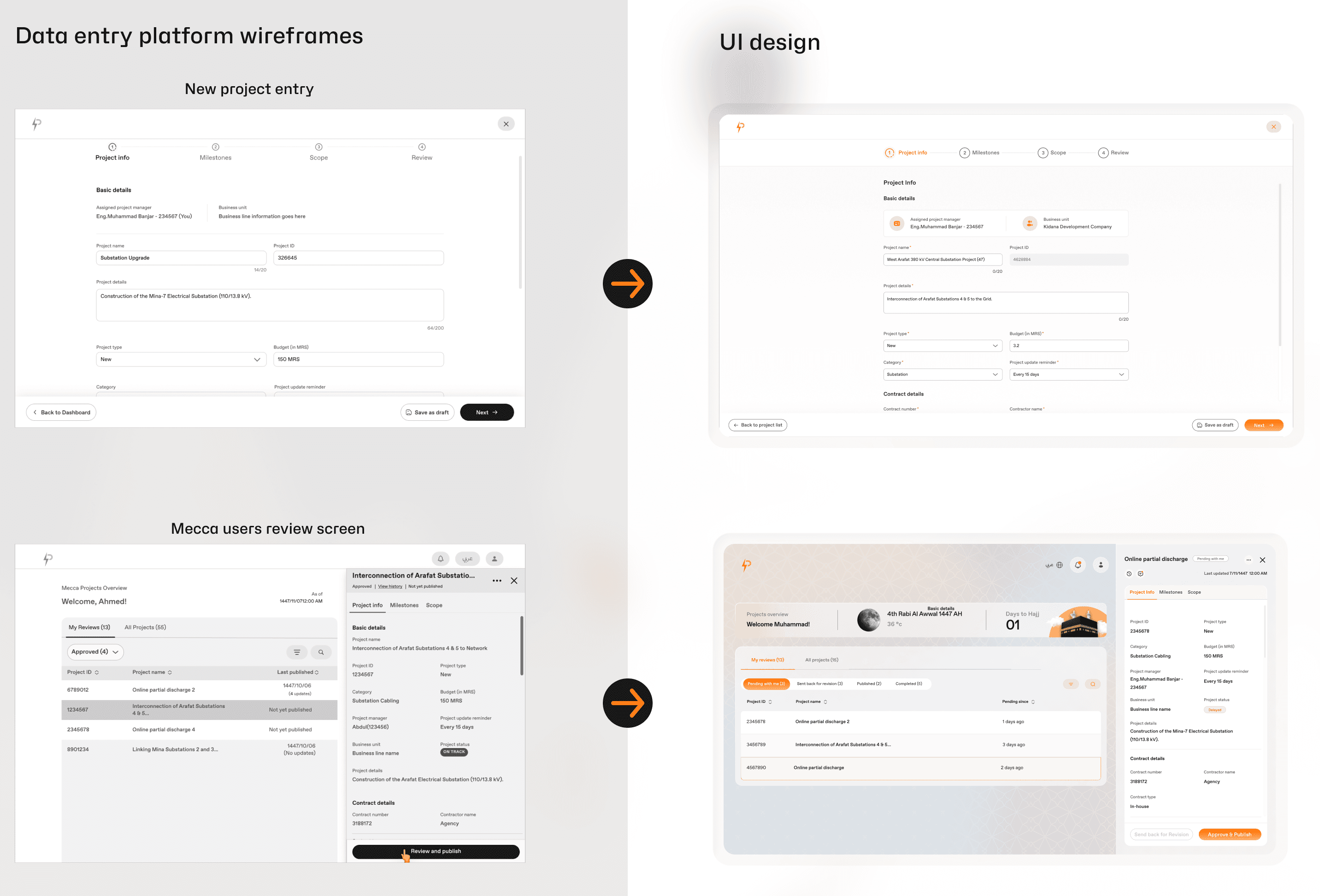
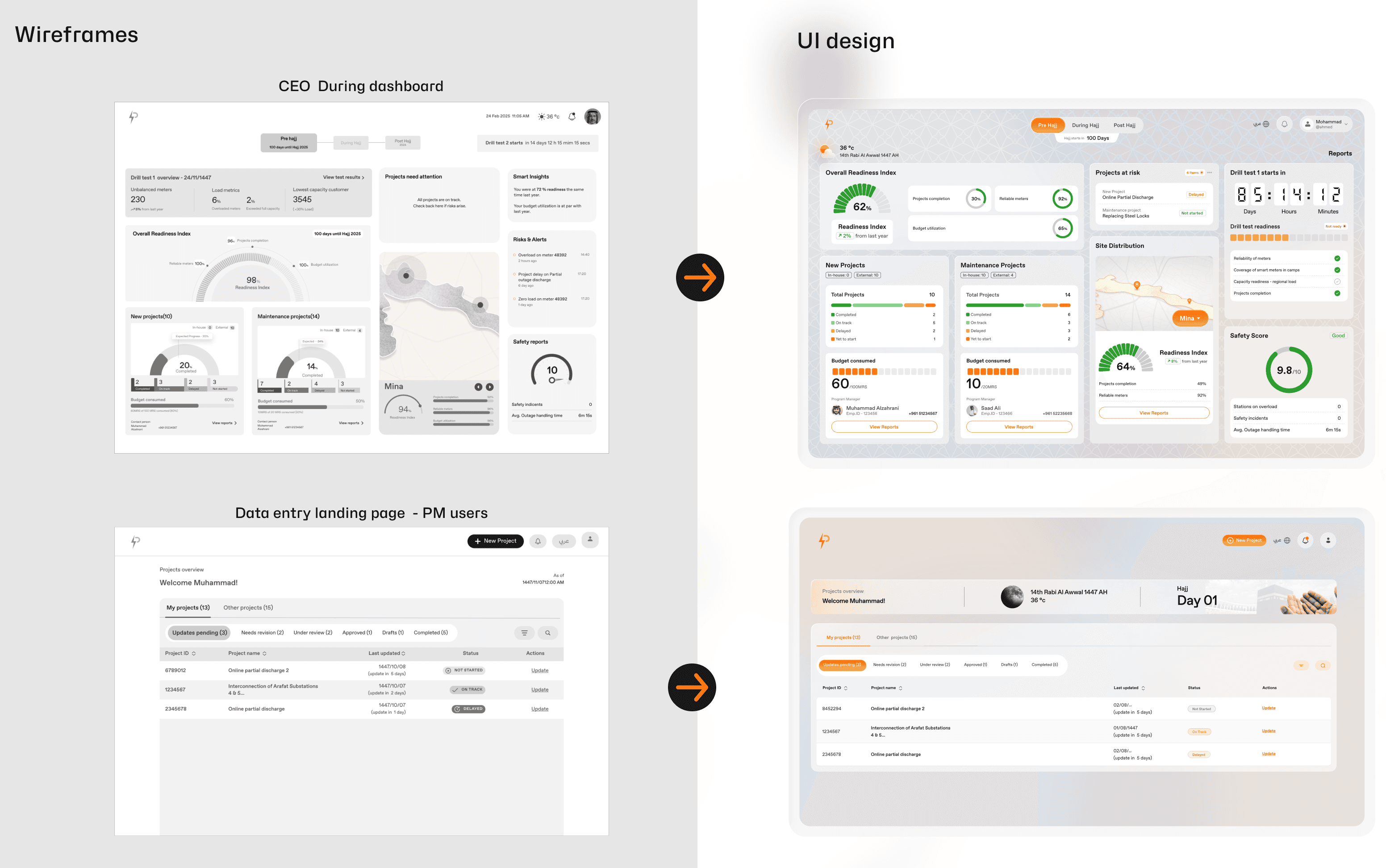
- Data-entry platform
- A separate product surface, deliberately not part of the CEO portal: login → project list → add or update → approval → reporting. Keeping it separate meant the people reporting reality were never designing around an executive's view of it.
- States as reusable patterns
- On Track, Delayed, Completed Early, Completed Late and Not Started, plus empty and no-result, validation, error, approval and send-back. These were authored as reusable patterns rather than one-off screens, so the same vocabulary carries across the whole workflow.
- Constraints navigated
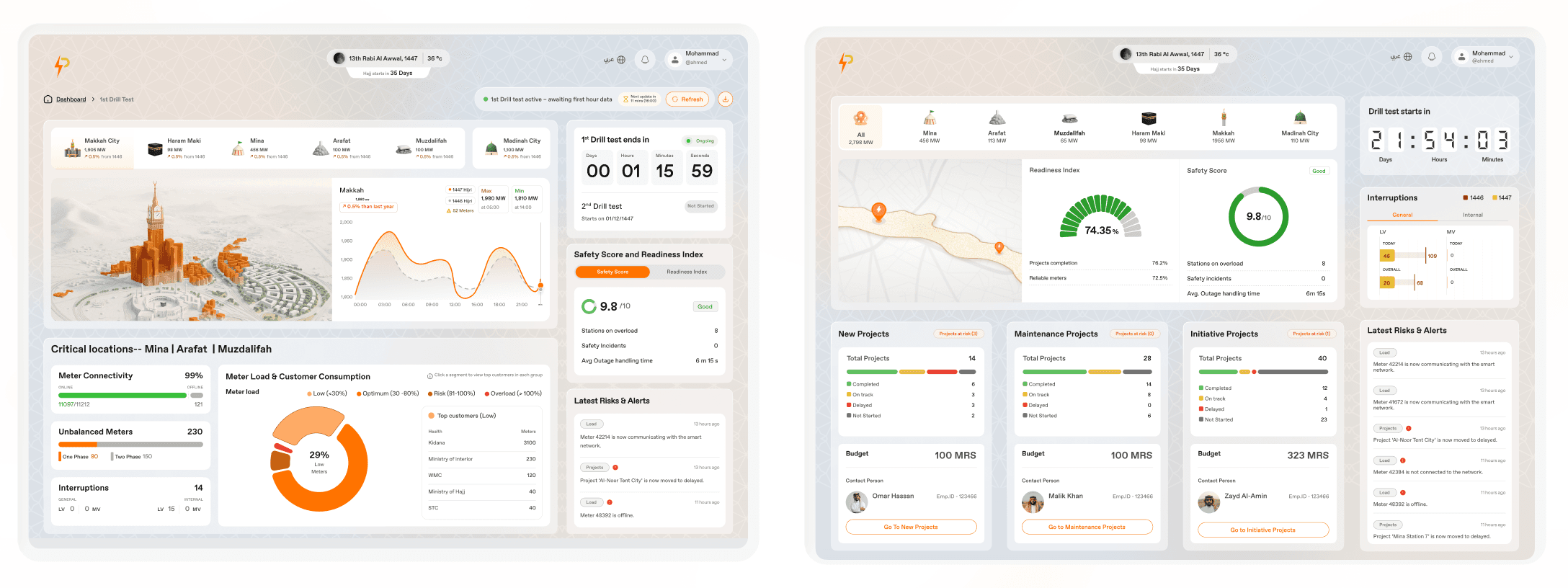
- Power BI's chart limitations meant investigating which visualisation patterns were actually supported and adapting the information design around what was feasible. The underlying data model could not be changed, so the work was designing around it — restructuring how information was surfaced, not touching the source structure.
- The Hajj operating cycle
- The same dashboard was designed to shift focus across pre, during and post Hajj: readiness before, live operations during, and learning after.
Delivery & outcome
A connected ecosystem, live for the 2026 Hajj season
The PowerPoint-and-meeting reporting process was replaced by a connected capture → validate → report → decide ecosystem, live for the 2026 Hajj season at MVP 3.
The change is qualitative and stated as such: leadership moved from periodic visibility that arrived with the next deck to continuous digital visibility of the same operation. No adoption, time-saving or performance figures were measured, so none are claimed.
Conclusion
The real transformation wasn't the dashboard. It was changing how operational information moved through the organisation — from ground reality to leadership decision.