Product design · Banking
Emirates Islamic Digital UX
Turning low digital engagement into repeat usage for Emirates Islamic’s existing customers, as the only designer in an agile squad.
- Banking B2C
- Mobile, tablet + online banking
- Sole designer in an agile squad
- 20 sprints
- Client
- Emirates Islamic Bank
- Year
- 2018
- Role
- Product Designer
- Platforms
- Mobile, tablet apps & online banking
- Timeline
- 10 months · 20 two-week sprints
01 · Overview
Overview
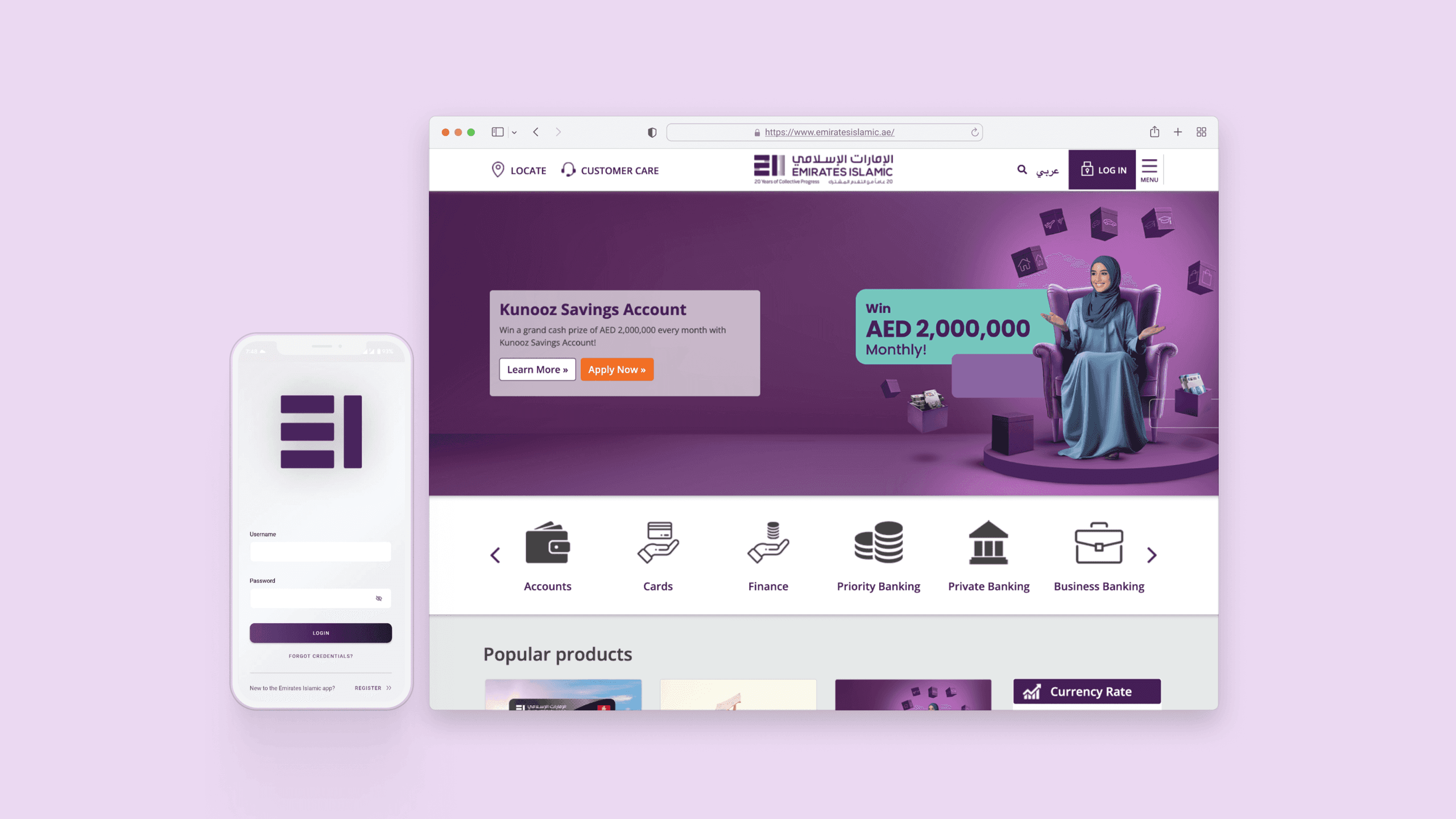
Emirates Islamic Bank (EIB) is a United Arab Emirates based bank providing Sharia-compliant banking. As part of the Emirates NBD group, it serves its own base of premium, loyal customers.
Those customers were not using digital banking. I was the only designer in the agile squad formed to change that, responsible for all UX from concept to after-live support, across the mobile app, tablet app and online banking website.
02 · The problem
Low engagement, frequent complaints
Emirates Islamic’s existing customers showed low engagement with digital channels: digital user retention was below 20%. The customers who did use digital services complained often, through retail branches and app store reviews.
- 01Low digital engagement limited the bank’s cost-saving opportunities and revenue growth.
- 02Frequent complaints risked customer satisfaction and retention. Left unresolved, they meant higher operational costs and missed opportunities to grow through digital channels.
03 · Goals & objectives
Three objectives for the squad
The goal was to enhance the overall user experience and increase digital adoption among existing customers. For UX, that became three objectives.
01
Objective 1
Fix at least 70% of the high-impact user pain points identified by the business.
02
Objective 2
Increase the digital user retention rate to above 50%.
03
Objective 3
Increase the conversion rate of digital banking users by at least 20%.
04 · Process
UX inside a two-week sprint cycle
The squad had limited time, so the challenge was fitting UX methods into agile. After a stakeholder workshop, UX discovery happened mainly at the product backlog stage.
01 · UX discovery
Backlog grooming
Understood the business goal and user pain point behind each story. Validated and grouped stories, prioritised them through user story mapping, and sent a user survey when a story needed more evidence before entering a sprint.
02 · Sizing
Sprint planning
Assigned story points by effort, sorted stories into small, medium and large, and explained the rationale for prioritising each design deliverable.
03 · Testing
Agile sprints
Paper sketches for brainstorming, guerrilla testing with employees outside the squad to check each design hypothesis, and competitor analysis of similar finance products.
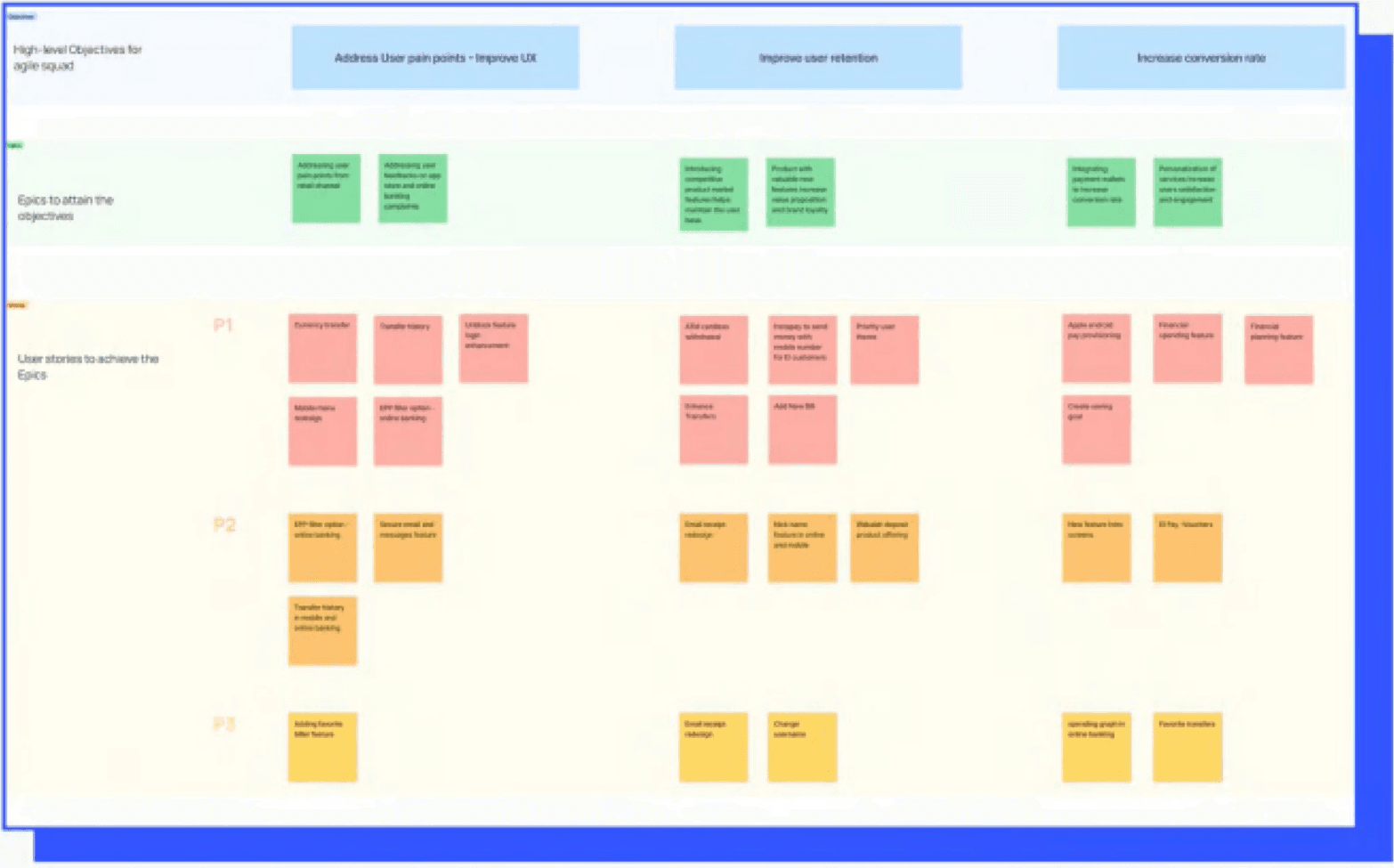
User story mapping, prioritised by impact against each objective.
05 · UI design during sprints
Two design tracks, sized to the work
- New features
- Understand → Page flow and information architecture → Wireframes → UI design → Testing.
- Minor requirements
- Understand → Paper sketches → UI design → Testing.
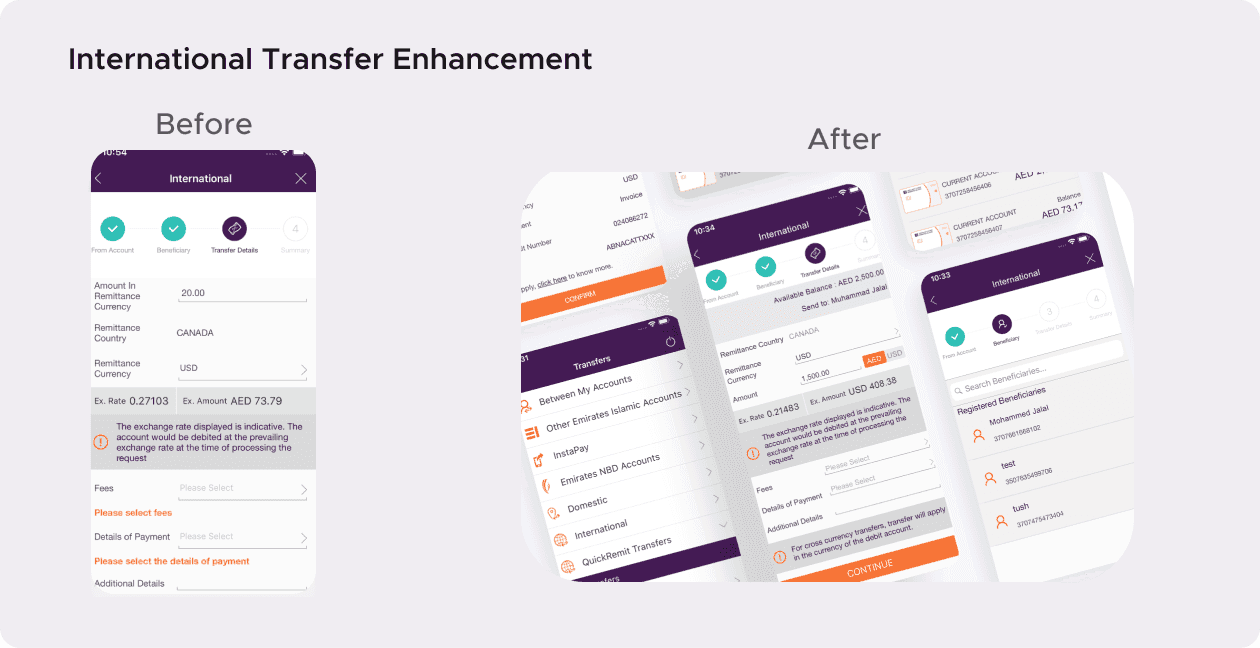
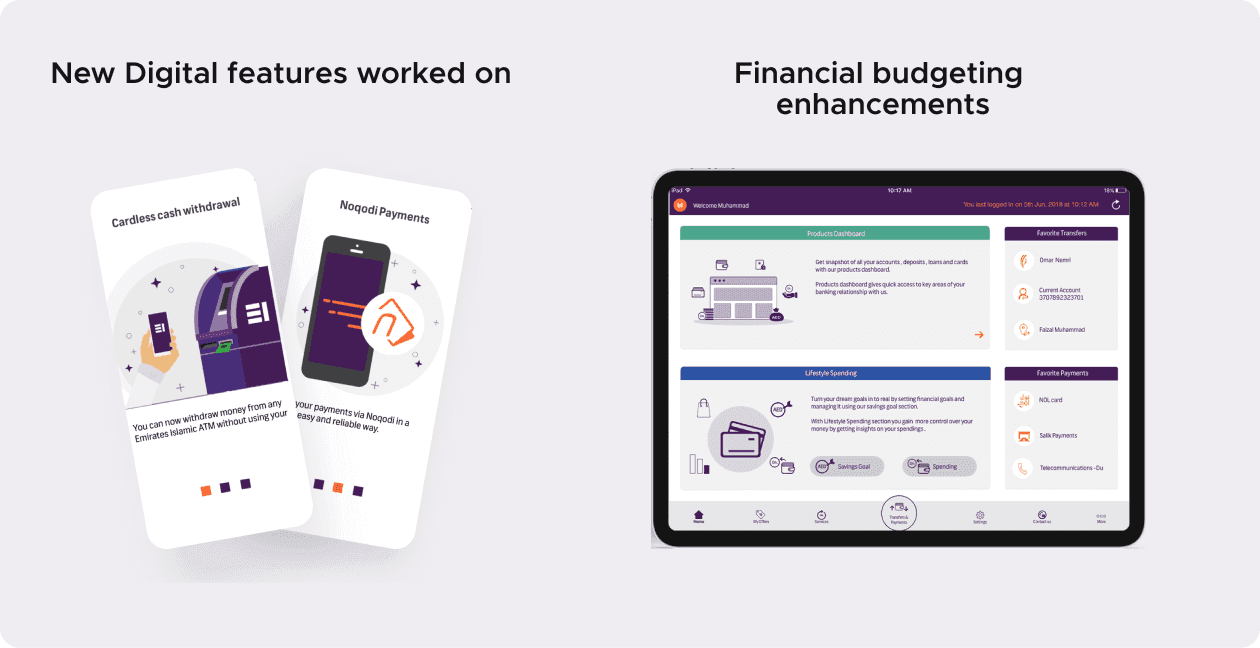
Work designed in sprints included ATM self-withdrawal on mobile (a new feature), the NOL top-up redesign, international transfer, and spending analysis and bill payments in online banking.
06 · Outcomes
Retention up, complaints down
- Digital customer retention
- Increased from below 20% to a weekly average of 55% by sprint 20, beating the 50% target.
- Customer advocacy (NPS)
- Exceeded 85.
- Customer complaints
- Reduced to fewer than 3 per week by sprint 18.
- Feature engagement
- Newly introduced features showed returning and regular customer usage.
07 · Why it worked
Why the numbers moved
- 01Improved existing banking journeys by addressing recurring customer pain points.
- 02Reduced customer friction and improved the overall digital banking experience.
- 03Introduced customer-requested features to address unmet needs.
- 04Encouraged repeat usage and stronger engagement with digital banking services.
- 05Improved customer advocacy and reduced recurring complaints.
08 · Measurement
How we measured it
- Digital customer retention
- Digital traffic analytics tracking returning customers after 30 days.
- NPS
- Customer feedback and recommendation scores.
- Customer complaints
- Weekly complaint volume, monitored across sprint releases.
- Feature adoption
- Unique customers using newly released features.
- Repeat feature usage
- Customers returning to use the same features over a defined 30-day period.
Conclusion
“Twenty sprints took digital customer retention from below 20% to a weekly average of 55%, with NPS above 85 and complaints under 3 a week by sprint 18.”
The lesson I carry forward: guerrilla testing validated assumptions quickly, but a few stories still needed rework, so formal usability testing belongs inside the sprints.
Next case studies